
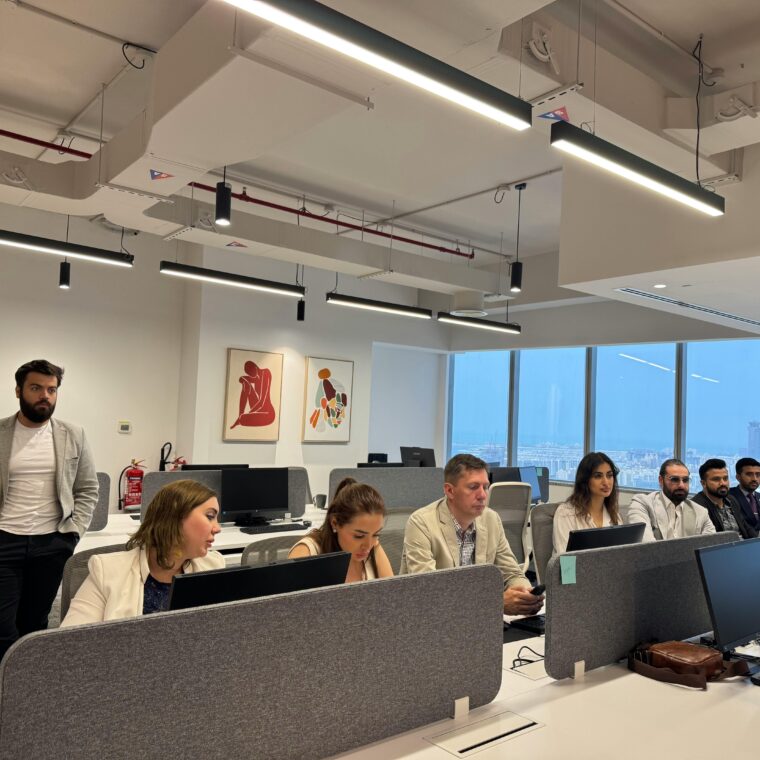

Over the last two decades, organizations across the world have increasingly adopted centralized operating models to improve efficiency, reduce costs, strengthen governance, and support business scalability.
Two terms frequently used in this transformation journey are:
- Global Capability Centers (GCCs)
- Shared Services
Although many people use these terms interchangeably, they are not the same.
Understanding the difference between GCCs and Shared Services is critical for business leaders, CFOs, COOs, and transformation teams planning operational strategy, finance transformation, outsourcing, or global expansion.
A poorly defined operating model can lead to:
- Governance gaps
- Inefficiencies
- Limited scalability
- Talent challenges
- Weak business alignment
On the other hand, choosing the right model can create long-term strategic value, operational excellence, and sustainable growth.
In this article, we explore:
- What GCCs and Shared Services actually mean
- Key differences between the two
- How they have evolved
- When organizations should use each model
- Why modern GCCs are becoming strategic business hubs
Understanding Shared Services
Shared Services is one of the earliest centralized operating models adopted by global organizations.
At its core, Shared Services refers to the consolidation of common business functions into a centralized unit that serves multiple departments, business units, or geographies.
The primary objective of traditional Shared Services is operational efficiency.
Organizations establish Shared Services centers to:
- Reduce duplication of work
- Standardize processes
- Improve productivity
- Lower operational costs
- Enhance service consistency
Shared Services typically focus on transactional and repetitive processes.
Common functions managed through Shared Services include:
- Finance & Accounting
- Payroll Processing
- Procurement Support
- HR Operations
- Customer Support
- IT Helpdesk
- Data Processing
For example, instead of maintaining separate finance teams across multiple countries, a company may centralize accounts payable, payroll, or reporting into one shared services center.
This creates economies of scale and process consistency.
What Is a GCC (Global Capability Center)?
A Global Capability Center (GCC) is a more evolved and strategic operating model.
Unlike traditional Shared Services, GCCs are designed not only to centralize operations but also to build enterprise capabilities.
Modern GCCs support:
- Business transformation
- Analytics
- Digital operations
- Innovation
- Governance
- Risk management
- Strategic decision-making
- Product support
- Advanced finance functions
A GCC acts as an extension of the global enterprise.
It is deeply integrated into business strategy rather than functioning as a standalone support center.
Today’s GCCs often manage high-value and knowledge-intensive activities such as:
- Financial planning & analysis
- Business intelligence
- Data analytics
- AI and automation initiatives
- Cybersecurity operations
- Product engineering
- Risk advisory
- Governance & compliance
- Enterprise reporting
This makes GCCs significantly broader and more strategic than traditional shared services models.
The Evolution: From Shared Services to GCCs
The difference between GCCs and Shared Services becomes easier to understand when viewed historically.
Phase 1: Cost Efficiency Era
Initially, organizations established Shared Services primarily for:
- Cost reduction
- Labor arbitrage
- Process centralization
The focus was heavily operational.
Success was measured through:
- Headcount reduction
- Transaction productivity
- SLA performance
- Operational savings
This model worked well for repetitive and rule-based processes.
Phase 2: Process Standardization
As organizations matured, Shared Services evolved into more structured operating models.
Companies began focusing on:
- Process harmonization
- Workflow optimization
- Governance frameworks
- KPI management
- Service quality
The objective expanded beyond cost savings toward operational consistency and scalability.
Phase 3: Strategic Capability Building
As technology, analytics, automation, and business complexity increased, organizations realized they needed more than centralized processing centers.
They needed:
- Decision support
- Innovation capability
- Digital expertise
- Risk management
- Data intelligence
- Transformation leadership
This led to the rise of Global Capability Centers (GCCs).
Modern GCCs are now becoming:
- Transformation hubs
- Analytics centers
- Digital capability engines
- Innovation ecosystems
- Governance-focused operational centers
This marks the fundamental shift from Shared Services to GCCs.
Key Differences Between GCCs and Shared Services
Although both models involve centralization, the intent, scope, and strategic role are very different.
1. Primary Objective
Shared Services
The main objective is operational efficiency and cost optimization.
Focus areas:
- Process consolidation
- Cost savings
- Standardization
- Transaction processing
GCC
The primary objective is strategic capability creation.
Focus areas:
- Business transformation
- Analytics
- Innovation
- Governance
- Digital enablement
- Enterprise scalability
2. Nature of Work
Shared Services
Typically manages transactional and repetitive processes.
Examples:
- Accounts payable
- Payroll
- Invoice processing
- Employee onboarding
- Basic reporting
GCC
Handles strategic, analytical, and specialized activities.
Examples:
- Financial analytics
- AI automation
- Risk management
- Data science
- Product engineering
- Transformation management
3. Business Integration
Shared Services
Usually operates as a centralized support function.
GCC
Functions as an integrated extension of the enterprise and contributes directly to business strategy.
4. Talent Profile
Shared Services
Focuses more on operational processing skills.
GCC
Requires specialized and strategic talent:
- Analysts
- Data scientists
- Transformation leaders
- Automation experts
- Governance professionals
- Digital specialists
5. Technology & Innovation
Shared Services
Technology is used mainly for operational efficiency.
GCC
Technology becomes a core business enabler.
GCCs actively drive:
- Automation
- AI adoption
- Analytics
- Digital transformation
- Intelligent reporting
6. Governance Expectations
Shared Services
Governance focuses on service delivery and operational controls.
GCC
Governance becomes enterprise-critical.
GCCs often manage:
- Compliance frameworks
- Risk management
- Internal controls
- Audit readiness
- Regulatory reporting
7. Strategic Value
Shared Services
Primarily creates operational savings.
GCC
Creates long-term business value and enterprise capability.
Why Organizations Are Moving Toward GCC Models
Many organizations that initially established Shared Services are now transitioning toward GCC structures.
Why?
Because business needs have changed dramatically.
1. Automation Has Reduced Traditional Labor Advantages
Technology is automating many transactional activities traditionally handled by shared services.
Organizations now seek higher-value capabilities beyond manual processing.
This pushes GCCs toward:
- Analytics
- Intelligence
- Automation management
- Strategic operations
2. Business Complexity Has Increased
Global operations are becoming more interconnected and complex.
Organizations need centralized teams that can:
- Support transformation
- Manage risk
- Improve visibility
- Enable enterprise-wide decision-making
GCCs provide this capability.
3. Governance Has Become Critical
Regulatory expectations continue to increase globally.
Organizations require stronger:
- Internal controls
- Compliance management
- Governance frameworks
- Risk monitoring
Modern GCCs help strengthen enterprise governance.
4. Data & Analytics Are Driving Business Decisions
Organizations increasingly rely on real-time insights.
Modern GCCs support:
- Business intelligence
- Financial planning
- Data analytics
- Performance reporting
This elevates their role significantly beyond traditional shared services.
5. Enterprises Need Scalable Operating Models
GCCs enable organizations to:
- Standardize global operations
- Improve scalability
- Centralize expertise
- Build operational resilience
This makes GCCs critical to long-term growth strategies.
Does Shared Services Still Matter?
Absolutely.
Shared Services continue to play an important role in many organizations.
In fact, Shared Services often form the operational foundation of a GCC.
Not every organization requires a full GCC model.
For companies primarily focused on:
- Transaction centralization
- Operational efficiency
- Cost optimization
- Service consistency
Shared Services may still be the right solution.
The key is aligning the operating model with business objectives.
When Should an Organization Choose Shared Services?
Shared Services may be appropriate when:
- Processes are highly transactional
- Operational standardization is the priority
- Cost optimization is the primary objective
- The organization is early in its transformation journey
- Business complexity is relatively lower
When Should an Organization Build a GCC?
A GCC model becomes more relevant when organizations want to:
- Build strategic enterprise capabilities
- Support digital transformation
- Enable analytics-driven decision-making
- Strengthen governance
- Scale global operations
- Centralize specialized expertise
- Create innovation ecosystems
India’s Role in the GCC Ecosystem
India has become one of the world’s leading GCC destinations.
However, the reason is no longer just labor cost advantage.
India now offers:
- Deep finance expertise
- Strong digital talent
- Analytics capability
- Mature shared services ecosystem
- Governance-oriented operational culture
- Large-scale transformation experience
Global enterprises increasingly establish GCCs in India for:
- Finance transformation
- Analytics
- Automation
- Governance support
- Risk management
- Digital operations
India is evolving from an outsourcing destination into a strategic capability hub.
Common Mistakes Organizations Make
Even today, many organizations struggle because they misunderstand the distinction between GCCs and Shared Services.
Common mistakes include:
Treating GCCs Like Traditional Shared Services
This limits innovation and strategic value creation.
Focusing Only on Cost Savings
Long-term success requires governance, scalability, and capability building.
Weak Governance Structures
Poor controls create operational and compliance risks.
Lack of Strategic Alignment
Operating models must align with enterprise objectives.
Ignoring Talent Evolution
Modern GCCs require high-quality specialized talent.
The Future of GCCs and Shared Services
The future will likely see greater convergence between Shared Services and GCC models.
Many organizations will continue operating hybrid structures where:
- Transactional activities remain within Shared Services
- Strategic capabilities evolve within GCCs
Future GCCs will increasingly focus on:
- AI and automation
- Analytics and intelligence
- Governance and compliance
- Transformation leadership
- Innovation ecosystems
- Enterprise resilience
The role of GCCs will continue expanding far beyond operational processing.
Final Thoughts
The difference between GCCs and Shared Services is not just operational—it is strategic.
Shared Services focus primarily on:
- Efficiency
- Standardization
- Transaction processing
- Cost optimization
GCCs focus on:
- Strategic capability building
- Governance
- Innovation
- Analytics
- Transformation
- Enterprise scalability
Both models have value.
The right choice depends on an organization’s:
- Business maturity
- Strategic goals
- Operational complexity
- Digital ambitions
- Governance requirements
Organizations that understand this distinction clearly are far better positioned to build scalable, future-ready operating models.
Because in today’s business environment, operational efficiency alone is no longer enough.
The future belongs to organizations that combine efficiency with intelligence, governance, and strategic capability.
About the Author
Alok Kumar Sanghai is a GCC & Shared Services transformation leader with over 25 years of experience across Global Capability Centers, Finance Transformation, Governance, Risk, and Managed Services.
He advises organizations on building scalable, governance-driven, and future-ready operating models across banking, financial services, and consumer sectors.
For more insights on GCC Strategy, Shared Services Transformation, Finance Transformation, Governance, and Managed Services, visit www.aloksanghai.com